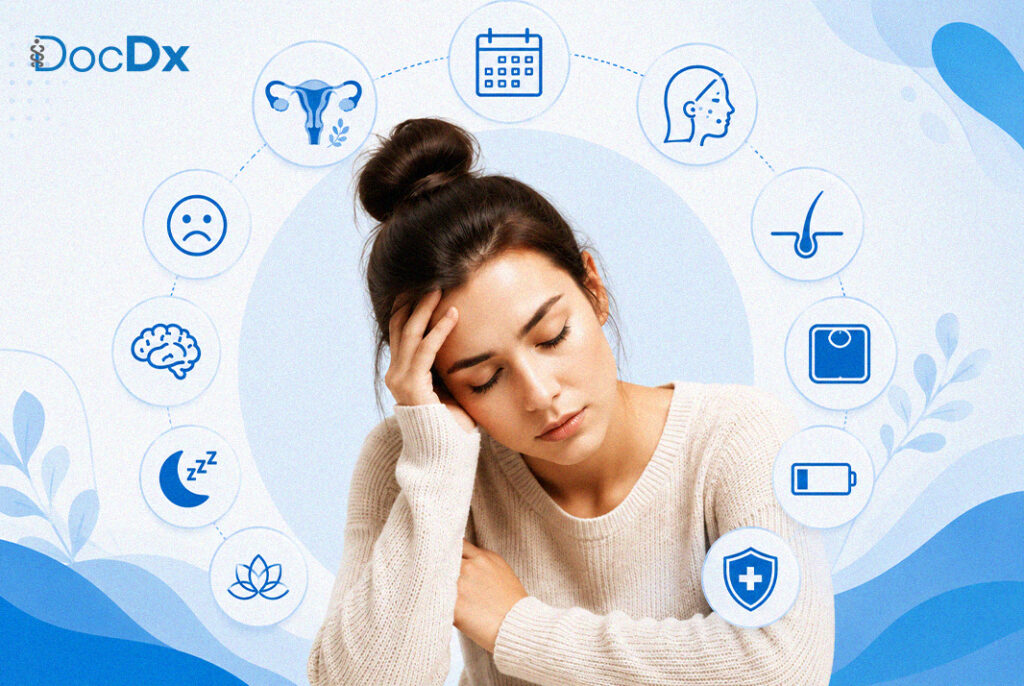
PCOS symptoms can affect much more than your menstrual cycle. Changes in your skin, hair, weight, energy, sleep, mood, and fertility may sometimes be linked to polycystic ovary syndrome (PCOS). Because these changes can look like ordinary parts of adult life, PCOS may go unrecognized for years.
PCOS is a common hormonal and metabolic condition. It can affect ovulation, hormone levels, and long-term health. Importantly, you don’t need to have every classic symptom to have PCOS. Some people have irregular periods and acne. Others may notice excess hair growth, difficulty with ovulation, or metabolic changes instead.
That’s why knowing the less obvious signs can be helpful.
Medical Note:
Having one or more of these symptoms doesn’t mean you have PCOS. Several other health conditions can cause similar changes. A qualified healthcare professional can help determine the cause.
PCOS Is More Than an Irregular Period
When people hear “PCOS,” they often think about irregular periods or fertility problems. Those are important signs, but they’re only part of the picture.
PCOS can involve reproductive, hormonal, metabolic, skin, and emotional health. Current international guidance also recognizes broader features, including metabolic risk, sleep problems, and psychological symptoms.
Why PCOS Can Be Easy to Miss
Adult life is busy. It’s easy to blame fatigue on work, acne on stress, or changes in weight on getting older.
Sometimes, that’s exactly what happens.
A person may spend years treating individual symptoms without anyone connecting them. For example, they might see a dermatologist for acne, use hair-removal treatments for facial hair, and simply accept unpredictable periods as “normal.”
The bigger picture can be missed.
PCOS Doesn’t Look the Same for Everyone
PCOS is not a one-size-fits-all condition.
Some people have several noticeable symptoms. Others have only a few. A person can also have PCOS while maintaining a weight considered healthy for their height. ACOG notes that not everyone with PCOS is overweight.
This is important because weight alone shouldn’t determine whether someone is evaluated for PCOS.
PCOS Symptoms Adults Often Overlook
Here are ten signs that may deserve a closer look, especially when several occur together.
1. Irregular or Unpredictable Periods
An occasional late period isn’t unusual. But periods that repeatedly come very early, very late, or disappear for months may need evaluation.
PCOS can interfere with regular ovulation. As a result, menstrual cycles may become unpredictable.
You may notice:
- Periods that are far apart
- Skipped periods
- Bleeding that lasts longer than usual
- Very heavy bleeding
- Cycles that suddenly become irregular
- Periods that occur less often than expected
ACOG recommends discussing periods with a healthcare professional when cycles become consistently irregular, occur less than 45 days apart or more than 90 days apart, or last more than seven days.
A missed period can have many causes, though. Pregnancy, thyroid problems, stress, certain medications, significant changes in exercise or eating, and other conditions can also affect menstruation.
2. Persistent Adult Acne
Still dealing with stubborn acne years after your teenage years?
Hormonal changes can play a role.
PCOS can be associated with higher androgen levels. Androgens are hormones that can increase oil production and contribute to acne.
Adult acne may appear on the:
- Chin
- Jawline
- Lower face
- Chest
- Back
Acne alone doesn’t point to PCOS. But persistent acne becomes more worth discussing with a healthcare professional when it occurs alongside irregular periods, excess hair growth, or other hormonal changes.
3. New or Excess Facial Hair
A few stray hairs are normal. However, new or noticeably increased coarse hair on the face, chin, chest, abdomen, or other areas may be a sign of higher androgen activity.
This condition is called hirsutism.
It can be frustrating and uncomfortable, particularly when the change happens gradually. Some people may spend years waxing, shaving, threading, or using other hair-removal methods without realizing that a hormonal condition could be contributing.
Excess hair growth is one of the recognized symptoms associated with PCOS.
4. Dark, Velvety Skin Patches
Have you noticed darker, thicker areas of skin around your neck or in skin folds?
One possible cause is acanthosis nigricans.
These patches may feel slightly thicker or velvety. They can appear around the:
- Neck
- Armpits
- Groin
- Other skin folds
Acanthosis nigricans can be associated with insulin resistance. Insulin resistance means the body’s cells don’t respond as well to insulin, which can lead the body to produce more insulin.
It isn’t proof of PCOS, but it’s worth bringing up during a medical visit.
5. Unexplained Weight Changes
Weight changes can happen for many reasons, including diet, activity, sleep, medications, stress, and normal changes over time.
However, unexpected weight gain can sometimes occur alongside PCOS and insulin resistance.
The important point is that PCOS isn’t a condition that only affects people with obesity. A person can have PCOS at many different body sizes.
For that reason, weight shouldn’t be used as a simple yes-or-no test for PCOS.
6. Trouble Losing Weight
Some adults with PCOS find weight management particularly difficult.
That doesn’t mean weight loss is required to “prove” that someone has PCOS. Nor does it mean every person with PCOS will have difficulty managing their weight.
Instead, consider the whole picture.
Difficulty with weight management may deserve further discussion when it occurs with irregular periods, acne, excess facial hair, signs of insulin resistance, or other hormonal symptoms.
A healthcare professional can look at the broader pattern rather than focusing on the number on a scale.
7. Hair Thinning or Hair Loss
PCOS doesn’t only cause excess hair growth.
Higher androgen activity can also contribute to scalp hair thinning in some people.
You might notice:
- A wider part
- Thinning around the crown
- More hair in your brush or shower drain
- A gradual reduction in hair density
Hair loss has many possible causes, including thyroid disorders, nutritional deficiencies, stress, certain medications, and other hormonal conditions.
That’s why sudden or persistent hair loss deserves proper evaluation instead of assuming it’s automatically PCOS.
8. Fertility or Ovulation Problems
PCOS is one of the most common causes of infertility related to irregular ovulation.
The issue isn’t necessarily that the ovaries cannot produce eggs. Instead, ovulation may not happen regularly.
You might not realize there’s an ovulation problem until you begin trying to become pregnant.
The good news is that having PCOS doesn’t mean you can’t have children. Treatments are available to help people who want to become pregnant.
If pregnancy is a future goal, it can be useful to discuss your menstrual pattern and reproductive health with your healthcare provider even if you’re not trying to conceive right now.
9. Sleep Problems and Daytime Tiredness
Feeling tired all the time is easy to dismiss.
Maybe you’re working long hours. Maybe you’re not sleeping enough. Maybe life is simply hectic.
But persistent fatigue deserves attention.
PCOS has been associated with sleep disorders, including sleep apnea.
Signs of a possible sleep problem can include:
- Loud snoring
- Waking up frequently
- Morning headaches
- Feeling tired despite getting enough time in bed
- Difficulty concentrating during the day
- Excessive daytime sleepiness
Fatigue isn’t specific to PCOS, so don’t assume the condition is responsible. Still, it’s worth mentioning during a medical evaluation.
10. Mood Changes and Emotional Strain
PCOS can affect more than physical health.
People living with PCOS may experience psychological symptoms, including depression and anxiety. ACOG also notes a higher risk of depression among women with PCOS.
Living with unpredictable periods, acne, hair changes, fertility concerns, or weight-related stigma can also be emotionally difficult.
If you’re feeling persistently sad, anxious, overwhelmed, or unlike yourself, don’t brush it off.
Mental health deserves the same attention as physical symptoms.
What Causes PCOS Symptoms?
There isn’t one single cause of PCOS.
The condition involves a combination of hormonal and metabolic factors. The exact reason someone develops PCOS isn’t fully understood.
Hormone Changes
Many people with PCOS have higher levels of androgens than expected.
Androgens are sometimes called “male hormones,” but everyone produces them. Higher androgen activity can contribute to:
- Facial or body hair growth
- Acne
- Scalp hair thinning
- Problems with ovulation
Insulin Resistance and Metabolic Health
Insulin resistance can also play a role in PCOS.
When the body doesn’t respond normally to insulin, the pancreas may produce more of it. Higher insulin levels can interact with ovarian hormone production and contribute to some PCOS symptoms.
PCOS is also associated with a higher risk of metabolic conditions, including type 2 diabetes and cardiovascular disease.
That doesn’t mean everyone with PCOS will develop these conditions. It does mean ongoing health monitoring can be important.
When Should You Talk With a Doctor?
Consider making an appointment if you notice several symptoms that don’t have an obvious explanation.
For example, you may want to discuss PCOS if you have:
- Repeatedly irregular periods
- Persistent adult acne
- New or excessive facial hair
- Scalp hair thinning
- Difficulty becoming pregnant
- Signs of insulin resistance
- Significant or unexplained changes in weight
- Ongoing sleep problems or fatigue
- Mood symptoms that are affecting daily life
Don’t wait until symptoms become severe.
A healthcare professional can help determine whether PCOS is a possibility or whether another condition better explains what’s happening.
How Is PCOS Diagnosed in Adults?
There isn’t one single test that confirms PCOS.
Diagnosis usually involves looking at your symptoms, medical history, physical findings, and appropriate testing while considering other possible causes.
Medical History and Symptom Review
Your healthcare professional may ask about:
- When your periods started changing
- How often you get your period
- Acne
- Hair growth or hair loss
- Weight changes
- Medications
- Pregnancy history
- Family history
- Other health conditions
Keeping a simple menstrual and symptom record can make this conversation easier.
Blood Tests and Other Evaluations
Blood tests may be used to assess hormone levels and other health markers.
Testing can also help rule out other conditions that can cause similar symptoms.
The exact tests depend on your symptoms and medical history.
Ultrasound and Other Tests
An ultrasound may be used as part of a PCOS evaluation in some adults.
However, having “cysts” on an ultrasound isn’t required for everyone with PCOS. PCOS is more complex than the name suggests.
The 2023 international guideline also updated diagnostic approaches for adults and recognizes anti-Müllerian hormone (AMH) as an alternative to ultrasound in certain adult diagnostic settings.
Testing should be individualized rather than based on a single symptom or result.
What You Can Do If You Suspect PCOS
If several of these symptoms sound familiar, don’t panic.
PCOS is manageable, and getting the right information is an important first step.
Start by writing down:
- The dates of your periods.
- Any major changes in bleeding.
- New acne or hair growth.
- Hair thinning or hair loss.
- Changes in weight or energy.
- Sleep concerns.
- Mood changes.
- Any fertility concerns.
- Medications and supplements you’re taking.
- Questions you want to ask your healthcare professional.
Bring this information to your appointment.
Most importantly, avoid diagnosing yourself based on an online symptom list. Similar symptoms can occur with thyroid disorders, medication effects, stress, pregnancy, and other conditions.
For additional patient-focused information, the American College of Obstetricians and Gynecologists (ACOG) PCOS guide is a useful medical resource.
The Bottom Line
PCOS can be easy to overlook because its symptoms don’t always arrive as one obvious package.
An irregular period may seem unrelated to adult acne. Hair thinning may seem like a separate issue. Fatigue may be blamed on a busy schedule. Difficulty becoming pregnant may be the first reason someone finally seeks answers.
But sometimes, these changes are connected.
If you’ve noticed several of these symptoms, consider talking with a healthcare professional. A proper evaluation can help identify what’s causing your symptoms and whether PCOS may be involved.
Most importantly, you don’t have to figure it out alone. PCOS is a long-term condition, but with appropriate care and monitoring, many people with PCOS can live healthy, active lives.